


FenceTeck is a fencing company that was seeking a more cohesive online presence through social media marketing and their website.
Month: October 2024
Crème Carpets
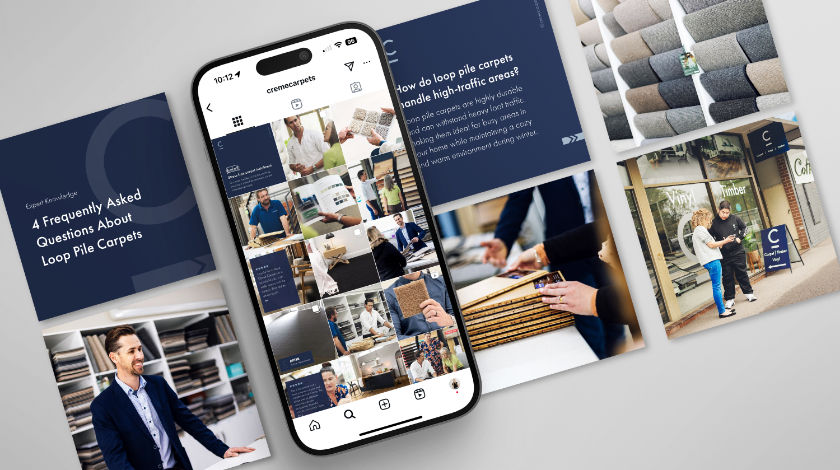
Crème Carpets is a flooring business in Canberra that was seeking an increased online presence through social media marketing to grow their business.
SEO Demystified: Boost Your Online Visibility
In today's digital age, a strong online presence is essential for businesses to thrive. With millions of websites competing for attention, standing out in search engine results is crucial. This is where Search Engine Optimisation (SEO) comes into play.
SEO is the art and science of improving your website's visibility and ranking on search engine results pages (SERPs). By understanding and implementing effective SEO strategies, B2B businesses can increase organic traffic, generate leads, and ultimately drive growth.
Bur first: How do search engines work?
To understand how to optimise your website for search engines, it's essential to grasp how search engines operate.
Search engines like Google use complex algorithms to crawl and index billions of web pages. They then rank these pages based on relevance, authority, and user experience.
Factors influencing search engine rankings include:

- Keyword relevance: Using relevant keywords throughout your website content helps search engines understand your page's topic.
- Content quality: High-quality, informative, and engaging content is more likely to rank higher.
- Website structure: A well-organised website with clear navigation improves user experience and search engine crawling.
- Page loading speed: Faster websites tend to rank better as users prefer quick-loading pages.
- Mobile-friendliness: With the increasing use of smartphones, having a mobile-optimised website is crucial.
- INSIGHT: Take note that Google defaults to mobile-first indexing. This means that Google primarily uses the mobile version of a website's content to index and rank pages.
- Backlinks: High-quality backlinks from authoritative websites boost your website's credibility.
- User experience: A positive user experience, including factors like bounce rate and time on site, influences rankings.
Understanding SEO: The 3 Fundamentals
SEO encompasses a wide range of techniques aimed at improving a website's search engine ranking. It can be broadly categorised into three key components:
1 - On-page SEO
This involves optimising elements within your website's control, such as website content, structure, and HTML code. By carefully selecting relevant keywords and creating high-quality content, you can enhance your website's relevance to search engine queries.
2 - Off-page SEO
This focuses on building authority and trust for your website through external factors. Backlinks from other reputable websites, social media engagement, and online directories contribute to improving your search engine ranking.
3 - Technical SEO
This involves optimising the technical aspects of your website to ensure it's easily crawlable and indexable by search engines. Factors like website speed, mobile-friendliness, and site structure play a vital role in technical SEO.
SEO Tips for B2B Businesses
Implementing effective SEO strategies can be challenging, but with the right approach, B2B businesses can achieve significant results.
| INSIGHT: SEO is a top inbound marketing priority. 61% of marketers identified improving SEO and growing organic presence as their top inbound marketing priority. (HubSpot) |
Here are some practical tips and fundamental steps to follow:
Step 1: Keyword research
Identify relevant keywords and phrases that your target audience is searching for.
Step 2: Content creation
Develop high-quality, informative, and engaging content that addresses your audience's needs.
Step 3: On-page optimisation
Optimise your website's title tags, meta descriptions, header tags, and content with relevant keywords.
Step 4: Link building
Build relationships with other businesses in your industry to earn high-quality backlinks.
Step 5: Local SEO
Optimise your website for local search if you target customers in Canberra or specific regions in Australia.
Step 6: Mobile optimisation
Ensure your website is responsive and provides a seamless user experience on mobile devices.
| INSIGHT: Mobile search is dominant: 52% of B2B search queries are made on smartphones in 2023, and this number is expected to grow. (b2bdigitalmarketers.com) |
Step 7: Track and analyse
Use analytics tools to monitor your website's performance and make data-driven decisions.
Speak with our expert SEO team to discover your search opportunities
The Realities and ROI of SEO

SEO is an essential component of any successful digital marketing strategy. By understanding the fundamentals of SEO and implementing the right tactics, B2B businesses can improve their online visibility, attract more qualified leads, and drive sustainable growth.
Take note: SEO is not a quick fix. Building a strong online presence through organic search results takes consistent dedication and strategic planning. It involves creating high-quality content, optimising your website structure, earning valuable backlinks, and staying updated with algorithm changes. These tasks demand time and resources.
Still, the rewards of a well-executed SEO strategy are substantial and long-lasting. By investing in SEO, businesses can enjoy:
✅ Sustainable organic traffic: Unlike paid advertising, SEO drives consistent, organic traffic to your website, reducing reliance on paid channels over time.
✅ Higher search engine rankings: Improved visibility on search engine results pages leads to increased brand awareness and credibility.
✅ Increased website authority: A strong SEO foundation establishes your business as an industry leader, influencing customer trust and decision-making.
✅ Improved ROI: While initial costs may be incurred, SEO ultimately generates a higher return on investment compared to many other marketing channels.
✅ Long-term competitive advantage: Consistent SEO efforts create a sustainable competitive edge, helping your business stay ahead of rivals.
How effective is SEO for B2Bs?
To appreciate the value that SEO can deliver for your business, check out some SEO numbers gathered from B2B brands that employ search engine optimisation in their overall digital marketing effort.
| SEO outperforms PPC: 70% of marketers believe SEO is more effective than PPC in driving results. (b2bdigitalmarketers.com) SEO generates high-quality leads: 81% of B2B marketing professionals agree that SEO provides better quality leads than PPC. (linkflow.ai) Organic search drives significant traffic: 76% of trackable B2B website traffic comes from organic search. (brightedge.com) Research starts with search: 71% of B2B researchers begin their research with generic Google searches. (thinkwithgoogle.com) |
👉 Remember, SEO is an ongoing process. While you may see initial results, continuous optimisation and adaptation are essential to maintain and enhance your online success.
one x: Your Partner in Digital Success
one x is a full-service marketing agency based in Canberra and servicing clients nationally, specialising in helping B2B brands achieve their online goals.
Our team of experts can assist you with SEO, Google Advertising, social media management, content creation, Meta Advertising, and email and SMS marketing.
We understand the unique challenges faced by B2B businesses and are committed to delivering results-driven campaigns.
Book a FREE Consult with our digital marketing experts today and discover how one x can help you boost your online visibility and drive business growth.
Ignite Your Brand: Top Social Media Trends for 2025
Social media has evolved from a mere platform for personal connections to a powerful tool for businesses to engage with their audience, build brand awareness, and drive sales. The landscape is constantly shifting, with new trends emerging at a rapid pace.
As we look ahead to 2025, it's essential for businesses, particularly those in the B2B sector, to stay informed and adapt their strategies accordingly. Let’s delve into the top social media trends predicted for 2025 and explore how B2B businesses can leverage them to gain a competitive edge.
Top Social Media Trends for 2025
1. The Rise of Short-Form Video Content
Short-form video content, pioneered by platforms like TikTok, has exploded in popularity. This trend is set to continue in 2025, with more businesses incorporating short, engaging videos into their social media strategies.
Short-Form Video Engagement and Spending
Videos under 90 seconds retain 50% of viewers.
Revenue from short-form video ads will surpass $10 billion. (Wordstream)
TikTok surpassed 3 billion downloads globally. (Sensor Tower)
Instagram Reels has over 1 billion monthly active users. (Instagram)
For B2B companies, this means creating concise and informative videos that showcase expertise, product demonstrations, or industry insights.
Insight: Video traffic will contribute 82% of all internet traffic worldwide by 2025. (Personify)
2. The Importance of Authenticity and Transparency
Consumers are becoming increasingly discerning, and they value authenticity and transparency in brands. In 2025, businesses will need to focus on building genuine relationships with their audience by sharing authentic stories, being transparent about their values, and actively listening to customer feedback.
3. The Dominance of User-Generated Content (UGC)
User-generated content will continue to gain traction in 2025. Encouraging customers to share their experiences with your brand can be a powerful marketing tool. By leveraging UGC, businesses can build trust, increase brand awareness, and generate valuable social proof.
User-generated content will continue to gain traction in 2025. Encouraging customers to share their experiences with your brand can be a powerful marketing tool. By leveraging UGC, businesses can build trust, increase brand awareness, and generate valuable social proof.

Bonds, an iconic Australian underwear and loungewear brand, has successfully leveraged User-Generated Content (UGC) through its #BondsBabe campaign.
- This initiative encouraged women to share their confident and comfortable selves in Bonds products.
- By creating a platform for authentic representation, Bonds fostered a strong community connection and increased brand loyalty.
- #BondsBabe empowered consumers to become brand ambassadors.
4. The Integration of Artificial Intelligence (AI)
AI is transforming the way businesses operate, and its impact on social media is undeniable. In 2025, we can expect to see increased use of AI-powered tools for tasks such as content creation, audience targeting, and customer service.
Check out these industry numbers on AI usage for key marketing functions:
- Content creation is the most common use case for AI in marketing. (Statista)
- 71% of marketers believe AI will improve content personalization. (Salesforce)
- 73% of marketers say AI is essential for effective audience targeting. (Adobe)
- AI-powered personalisation can increase marketing ROI by up to 40%. (McKinsey)
- AI-powered chatbots are expected to handle 85% of customer interactions by 2025. (Juniper Research)
- Customer satisfaction increases by 13% when AI is used in customer service. (Gartner)
5. The Focus on Inclusivity and Diversity

As society becomes more diverse, businesses must adapt their social media strategies to reflect these changes. In 2025, brands that prioritise inclusivity and diversity will be more likely to resonate with their audience and build a loyal customer base.
Leveraging Social Media Trends for B2B Success
To capitalise on these trends, B2B businesses should consider the following strategies:
Tip #1: Create high-quality, short-form video content to showcase expertise, share industry insights, and demonstrate product benefits.
Tip #2: Build authentic relationships with customers by sharing genuine stories, being transparent about company values, and actively engaging with the audience.
Tip #3: Encourage user-generated content by running contests, offering incentives, and showcasing customer testimonials.
Tip #4: Invest in AI-powered tools to streamline social media management, improve targeting, and enhance customer engagement.
Tip #5: Prioritise inclusivity and diversity in all social media content and marketing efforts.
The Impact of These Trends on the Industry
The social media landscape is evolving rapidly, and businesses that fail to adapt will be left behind. By embracing these trends, B2B companies can improve brand visibility, increase engagement, and drive leads.
However, it's important to remember that success depends on a well-executed strategy and consistent effort.
Speak with our expert social media team to discover opportunities.
Our Final Take
The social media trends for 2025 are clear: authenticity, video, user-generated content, AI, and inclusivity will be paramount. By understanding these trends and implementing the right strategies, B2B businesses can position themselves for success in the coming year.
one x: Your Partner in Digital Success
one x is a full-service marketing agency based in Canberra, servicing clients nationally, specialising in helping B2B brands thrive in the digital age. Our expertise encompasses social media management and content creation, SEO, Google Advertising, Meta Advertising, and email and SMS marketing.
We understand the unique challenges faced by B2B brands and are committed to delivering results-driven campaigns that help you achieve your goals.
Book a FREE Consult with our digital marketing experts at one x to learn how we can help you harness the power of social media.
